
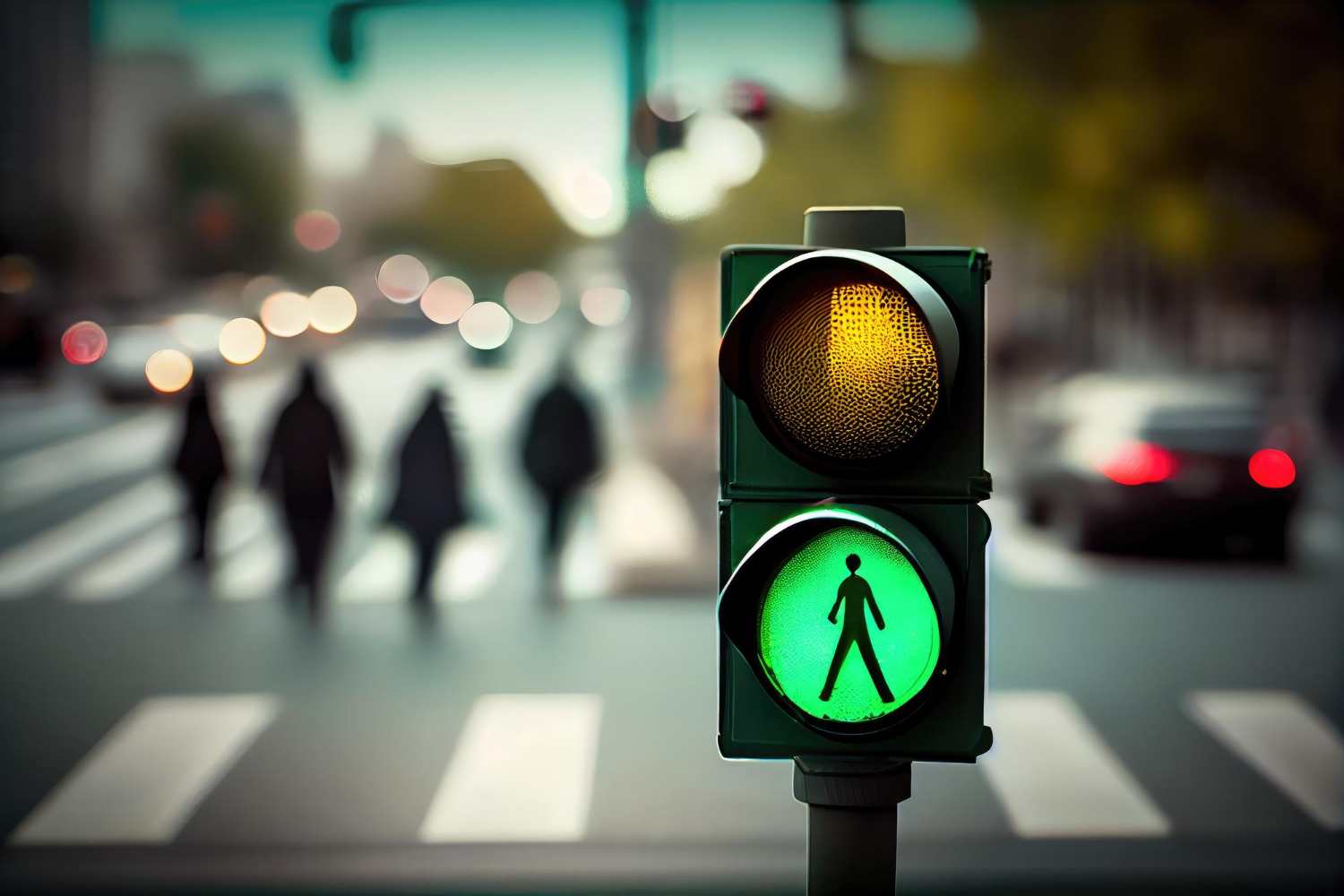
In every modern city, ensuring safe pedestrian crossings should be a top priority. Yet, thousands of people risk their lives every day trying to cross roads with poor signage, misaligned traffic lights, or inadequate infrastructure. Safe pedestrian crossings are not a minor urban detail — they are a key component of inclusive mobility and road safety.
A safe pedestrian crossing is one that is designed, signposted, and operated to allow any person — regardless of age or physical condition — to cross a road with minimal risk. This involves a combination of factors: proper visibility, adequate crossing time, sufficient lighting, clear signage, vehicle speed control, and, in many cases, smart devices that enhance the active safety of the crossing.
Pedestrian crossings must be designed from the pedestrian’s perspective, not just the driver’s. This means the crossing should be placed where people actually need it, not just where it’s geometrically convenient. It should also be visible from a distance, have accessible ramps, tactile paving for visually impaired individuals, and vertical elements that reinforce its presence, such as LED signs or flashing beacons.
One of the most common mistakes in Latin American cities is painting a zebra crossing and assuming that’s enough. Paint is only the first step. Without speed reduction measures, visual warning devices, or dedicated pedestrian signal phases, the risk remains. In fact, unregulated crossings tend to be the most dangerous, especially on multi-lane roads or near schools.
Incorporating technology into pedestrian crossings has proven highly effective. For example, contactless pedestrian buttons allow users to request a crossing without touching surfaces — especially important in public health contexts. Audible modules enhance accessibility for the visually impaired, and countdown timers clearly indicate how much time remains to cross or wait.
More advanced solutions include presence sensors that detect when someone is crossing and automatically adjust traffic light timing, or AI-powered cameras that monitor the behavior of drivers and pedestrians to trigger alerts or gather road safety data.
In areas with heavy traffic or complex intersections, safe crossings should be supported by active signage. This might include illuminated rings embedded in the pavement, vertical beacons, dedicated lighting, or warning panels that alert drivers to pedestrian presence. These measures significantly increase driver awareness and reduce accidents.
A comprehensive mobility strategy cannot succeed without integrating pedestrian needs from the design stage. Ensuring that an elderly person, a child, someone with reduced mobility, or a parent with a stroller can cross the street safely is a clear sign of a fair and humane city. Inclusive mobility is built on small details — and the pedestrian crossing is one of the most important.
At Soluciones de Tráfico, we promote a vision that combines engineering, technology, and field experience to implement safe, accessible, and visible pedestrian crossings. We have developed projects that integrate active signage, accessible devices, controllers programmed for sensitive areas, and preventive maintenance of critical infrastructure.
The challenge is not just technical — it is also cultural. Promoting a culture of pedestrian respect, supported by environments designed with safety in mind, creates more livable cities and significantly reduces accident rates. A well-designed crossing can make the difference between a safe journey and a preventable tragedy.
Investing in safe pedestrian crossings is investing in lives. It’s recognizing that all of us, at some point in the day, are pedestrians. And that a city that protects those who walk is a city that moves forward.
